

Window to Chiang Mai Thailand
Window to Chiang Mai Thailand
Elephant Care & Trekking Tours
The Chiang Mai valley is blessed with festivals almost the whole year round. Old festivals are based on the lunar calendar and either have their origin in Buddhist traditions or in Brahmanic and Tai beliefs associated with the rice growing cycle. Newer cultural festivals have evolved from a blend of local traditions and commercial interests.[See also: Tung and Taleo
Main Festivals
The Flower Festival
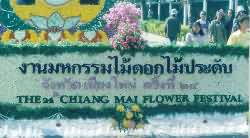 Flowers in Chiang Mai are at their best before the end of the cool season when this festival is held. This falls on the first weekend of February. The center of the festival is the parade held in the morning of Saturday. Floats decorated with flowers illustrate the theme chosen. The beauty queens surrounded by flowers make a magical sight.
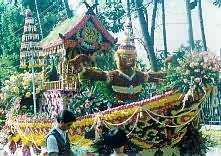 The flower beds of the public gardens are bathed in color and special displays are maintained till the end of Sunday when the most beautiful float will get a prize at a competition held at the Suan Buak Hat Park. Previously the parade was held on the outer moat road from Katam Corner to Sri Phum Corner. Recently this has changed to a route from the Nawarat bridge along Thapae Road to the Suan Buak Hat Park.
Songkran (Mid-April).
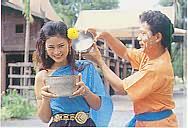 This festival marks the traditional Thai New Year, which until 1940 used to be when the Siamese new year began. The festival is the most important and is traditionally held when the sun moves out of Pisces.
In Chiang Mai the main events take place over three days (the dates vary for other northern provinces). By custom the first day falls on April 13th and is the last day of the old year.
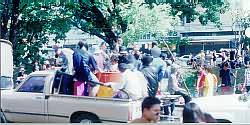 Firecrackers are let off at dawn and people spring clean their houses. In the afternoon a parade of Buddha images from Chiang Mai temples goes from the railway station to Wat Phra Singh. Northern people toss lustral water (water scented with perfume and flowers) to bathe the images as they pass along the streets. The Phra Sihing image leads the procession to Wat Phra Singh, where it is set in front of the temple for citizens to bathe throughout the rest of the festival.
Ceremonies are not held on the second day, which separates the new year from the old. In the afternoon sand is placed in the temple compound as a symbolic return of the sand carried out on the soles of shoes and feet of the people. The sand is made into small stupas for the next day.
The new year begins on the third day. The early morning is a particularly good time to visit the temples to watch people in traditional costume bringing offerings.
Ceremonies are held in the viharn. Outside, the people place flags in the sand chedi as well as symbolic sticks of support under Bhodi trees to bring good fortune in the new year.
Later in the day juniors pay respect to senior people and family members in a ceremony known as tam hua. In the afternoon the main government organizations hold a procession from Yupparat School to honor the governor at his residence by the Nawarat Bridge.
[ See also: Water throwing at Songkran ]
Loi Kratong
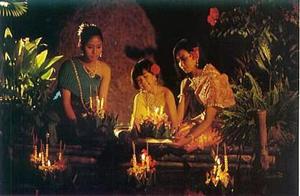 Loi Kratong, which is also known as Yi Peng in the north, is the most colorful festival of the year. It takes place over three days of the full moon of the twelfth lunar month, which is usually in November. The festival may have evolved from Brahmanic rites to honor the dead as well as local rites to bring an end to the rains.
Though legends suggest it was established by the time of King Tilokarat in the late 15th century, the origins of this festival prior to the 19th century are uncertain.
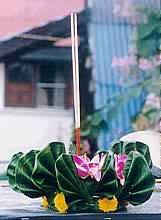 Now people generally believe that by releasing floats and balloons they get rid of bad luck and give thanks to the water and heavenly elements. Older folks may say that it is to show gratitude to the Goddess of the River - Mae Khong Kha - for use of the water.
For the three nights of the festival people release small floats - Kratong - made of disks cut from the banana tree stem and banana leafs, with offerings that include incense, flowers, candles and money into the rivers and lakes. The Ping River becomes a stream of lights floating gently with the current. Small hot air balloons rise like lanterns high into the sky, complementing the floats drifting on the waters. Fireworks are let of everywhere, particularly on the banks of the Ping River, and there is a parade each night in Chiang Mai.
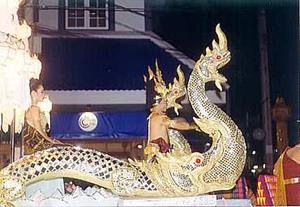 The festival begins the day before the full moon. People decorate the entrances of there houses with coconut branches, banana leafs, sugar-cane lanterns and colored paper. As dusk falls people light earthen lamps placed along the walls of their property and the fireworks start. The lantern parade takes place on Wang Sing Kham Road between Nawarat Bridge and Nakhorn Ping Bridge.
On the morning of the day of the full moon, people present offerings at the temples before releasing large hot air balloons from temple grounds. A competition for the best balloon is held in front of Chiang Mai Hall on Wang Sing Kham Road. Boat races are held on the river.
Festivals at a Glance
Calendar / Lunar Month: Festival and location: Origin of festival
January, 3rd weekend Umbrella Festival Bo Sang village: Cultural
January, 4 days on weekend nearest the end of the month: Wood Carving Fair, Ban Tawai, Hang Dong: Cultural
February, 1st Weekend: Flower Festival Chiang Mai: Cultural
February, 1st or 2nd weekend: Tin Chok Festival, Mae Chaem: Cultural: Celebrates local weaving traditions.
February, Full moon of 3rd lunar month: Makha Bucha, All temples: Buddhist: Celebrates a famous sermon given by Buddha.
April, 13th - 15th: Songkran, All over Thailand, especially the north: Ancient Tai-Indian: Traditional New Year
May, Full moon of 6th lunar month: Visakha Bucha, at temples all over Thailand: Buddhist: Celebrates birth, enlightenment & death of Buddha.
May-June, From 12th day of waning moon of sixth lunar month for 6 days: Inthakhin, Wat Chedi Luang: Especially in the evening when crowds make offerings at Chiang Mai pillar: Ancient Tai-Indian: Pay respects to Chiang Mai pillar, solicit rain & encourage prosperity
May-June, 6th-7th lunar months: Rocket Festivals, Wat Pa Tung, Wat Phra Non (and several other temples): Traditional: Solicit rain
June, 4th day of waxing moon of 7th lunar month: Suep Jata Muang, Offerings made to guardian spirits at the cardinal points of City (Gates, city pillar, etc.): Ancient Tai-Indian:, Prolong life of city.
June, 14th day of waxing moon of 7th lunar month: Liang Pu Sae -Ya Sae, Mae Hia near Wat Doi Kham. Medium is possessed by guardian spirit: Animist: Propitiate guardian spirits Pu Sae & Ya Sae who live on Doi Suthep.
July, Full moon and 1st day of waning moon of 8th lunar month: Asalaha Bucha - Wan Khao Pansa, All temples: Buddhist: Marks the first sermon given by the Buddha & the beginning of the rains retreat.
August, From full moon of 10th lunar month till end of September: Salakaphat, All temples, esp. Wat Chiang Man, Wat Chedi Luang & Wat Suan Dok: Buddhist: Lay merit making. Alms are put in baskets and given to monks by lottery.
October, 1st day of waning moon of 11th lunar month: Ok Pansa, All temples: Buddhist: End of rains retreat &
Tak Bat Devorohana, Hill temples, esp. Wat Fai Hin by Chiang Mai University. Monks walk down and receive alms (6 a.m.): Buddhist: Celebrates return of Buddha to earth from heaven where he had been teaching his mother.
October, Till the full moon of the 12th lunar month: Kathin, All temples. Thais travel in groups to distant temples: Buddhist: Lay merit making. Offerings of robes and alms.
November, For three days over the full moon of the 12th lunar month: Loi Kratong (Yi Peng), On waterways all over Thailand: Ancient Tai-Indian: Give thanks for water and stop the rains.
December, Weekend nearest 5th: Rose Festival, Suan Buak Had / Thapae Gate: Cultural: Beautiful flower displays honor H.M. King's birthday.
December 1st - 8th, in Lamphun; Dec. 30th - Jan 8th, in Chiang Mai: Winter Fairs, Lamphun: Sports stadium, Chiang Mai: Provincial Hall: Cultural: A noisy mix of fun fair, freak shows, and commercial promotions.
December, In the middle of the month: Food Festival, Suan Buak Had / Thapae Gate: Cultural
December 25th - 31st: Christmas & New Year: Traditional (imported)
Sightseeing Guide
Festivals

