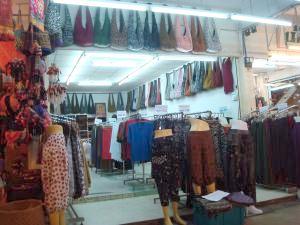
Welcome Shop, Chiang Mai, Thailand Welcome Shop, Chiang Mai, Thailand

Welcome Shop
Chiang Mai, Thailand

Retail, Wholesale & Made to Order

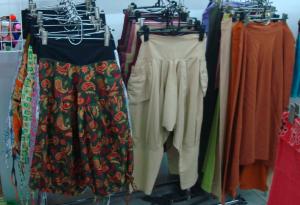
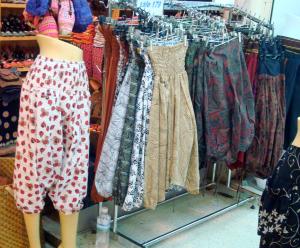
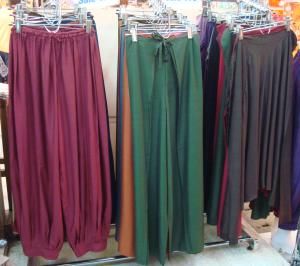
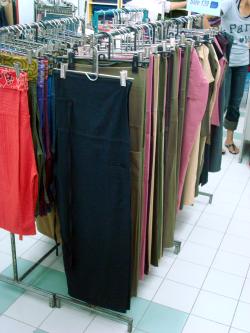
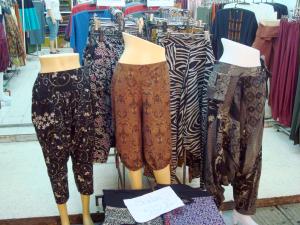
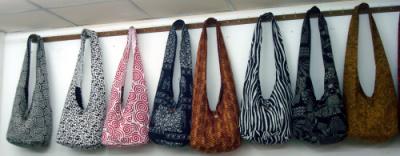
All kinds of tie-dye (batik) and other garments for casual wear at reasonable prices. Tailoring service is also available!

Wecome Shop, Chiang Mai, Thailand, Chiangmai Map of Welcome Shop, Chiang Mai, Thailand

We open every day (except Sundays) from 10.00h - 23.00h.
On Sundays we have a stall at the "Chiang Mai Open Road Project" inside the moat near the DTAC office.

You can find us at the corner of Thapae Road and Thapae Road Lane (Soi) 1. The second shop.

Our postal address is:
Welcome Shop, 35 Thapae Road, Soi 1, T. Chang Klan, A. Muang, Chiang Mai 50100, Thailand
Fax. +66 53 818412, Mobile: 01 2887875
Email: welcomeshopthailand@yahoo.com

We serve local customers as well as wholesalers and tourists from around the world and we exported already to as many as 30 countries.
The uniqueness of our tie-dyes makes great souvenirs or gifts brought home from your holidays in Chiang Mai.

Welcome Shop

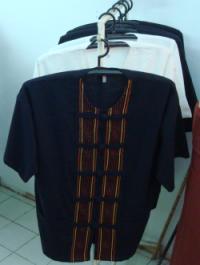
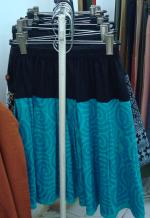
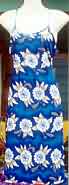
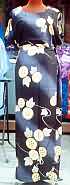
Some pieces of our collection
(many different colors available)

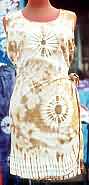
Tie-dye dress Printed dress Printed skirt set Printed dress
Dress Dress Skirt Set Dress

What is Tie-dye

Welcome Shop, Chiang Mai, Thailand, ChiangmaiThe word tie-dye encompasses a wide variety of dye processes in which a pattern (no matter how crude) is produced by a resist from folding, twisting or tying material in any way you can think of. Some type of tie-dye process was probably used shortly after the first fabrics and dyes were invented.

Brief History of Tie-dye

Welcome Shop, Chiang Mai, Thailand, Chiangmai Since fabric is perishable we don't have direct evidence of the earliest dye arts. Archaeologists have found a variety of stamps that may have been used for printing fabric 5,000 years ago in Mesopotamia and India. Some of the stamps are rocker shaped, some are cylinders, and some are flat with a handle on the back, indicating a variety of uses. Actual resist-dyed mummy cloths have been found from 1000 BC in Egypt. We think that dyeing techniques traveled along trade routes from India to Egypt.
There is also a rich tradition of tie-dye "shibori" in Japan where dye techniques were introduced from China around 400 BC. Shibori is still practiced in Japan and the United States. About 400 AD, Indian traders introduced dying techniques to Java where the art of Batik was developed. Plangi, tie-dye, and a sewn version "tri-tik" also flourished in Indonesia.

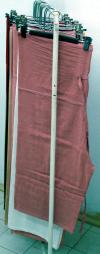
tye-dyes hanging to dryMany types of tiedye are still used today for clothing, backgrounds for screen printing, sheets, tapestries, tees, and table covers. Often whole garments are dyed, but many items are also made from material that has been previously dyed. Our particular type of tie-dyeing was not possible until the invention of fiber reactive dyes in 1956. Until then, dyes had to be applied hot or with b chemicals. Procion, the principle fiber reactive dye, can be applied cold and can be dripped on, which allows more than one color to be applied without reprocessing. Procion dye is also extremely colorfast.

You are Visitor: 2071